


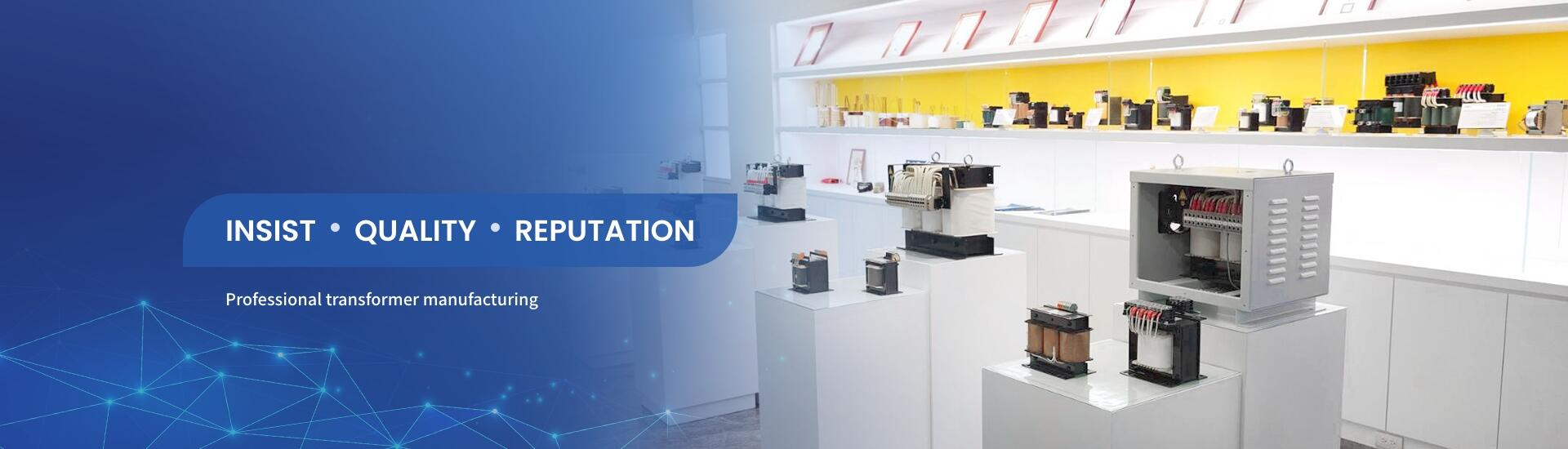
Industrial Transformer Application and Selection Guide: The Silent Hub of Factory Power
Industrial transformers act as the defense hubs of power systems in smart factories. Beyond matching voltage levels, they bear the crucial responsibility of stabilizing power quality:
- Stable Control Power Supply: Provides clean, regulated power for CNC machine tools, servo drives, and PLCs.
- Safe Electrical Isolation: Breaks physical circuits between input and output to prevent grid noise and surge interference.
- Preferred Dry-Type Protection: Low-voltage dry-type transformers are oil-free, fireproof, and maintenance-free, making them the top choice for indoor precision manufacturing facilities.
- Harmonic and Surge Defense: Equipped with K-Factor ratings to guard against overheating risks caused by harmonics from non-linear loads.
When machine tools experience sudden emergency shutdowns, PLCs reset without warning, or semiconductor equipment suffers yield drops due to momentary voltage fluctuations, the root cause is often not the machinery itself, but "power quality." Beyond basic voltage stepping, industrial transformers are tasked with isolating noise, suppressing surges, and stabilizing control power—making them an indispensable power core for modern smart factories. This article takes a deep dive into industrial transformer application scenarios, selection guidelines for specific industries, and practical design highlights that engineers prioritize, such as capacity calculation and harmonic overload defense.
- 1. Why Do Industrial Machines Require Transformers? Core Applications & Type Comparison
- 2. Trend Insights: Four Major Global Application Sectors for Transformers
- 3. Industry-Specific Analysis: Practical Case Studies & Selection Recommendations for Low-Voltage Dry-Type Transformers
- 4. How to Select an Industrial Transformer? 5 Key Points Engineers Must Verify
- 5. Practical Pain Point Analysis: From Equipment Downtime to Yield Recovery
- 6. Frequently Asked Questions (FAQ)
- 7. Conclusion: Building a Safe, Reliable, and High-Efficiency Factory Power Supply System
1. Why Do Industrial Machines Require Transformers? Core Applications & Type Comparison
In the machinery industry, transformers play an indispensable role as power hubs. They primarily resolve voltage mismatches between factory distribution systems and equipment ends while offering comprehensive electrical protection:
- Precise Voltage Conversion: Steps down high-voltage factory power distribution (e.g., 3-phase 380V or 480V) to equipment operating voltages (e.g., 220V or 110V).
- Complete Electrical Isolation: Severs the physical circuit between input and output, shielding precision controllers from internal factory surges and noise interference.
- Ensuring Machining Accuracy: Supplies stable power to spindle drives and motors of machine tools and CNC lathes, directly extending equipment service life and maintaining machining precision.
- Handling High Inrush Currents: Helps industrial automation equipment, PLC modules, and welding equipment handle momentary high current demands, maintaining consistent, controlled voltage levels.
Comparison of Three Mainstream Types of Industrial Transformers
The table below summarizes key characteristics and application scopes for three common types of industrial transformers:
| Transformer Type | Electrical Isolation Capability | Relative Cost | Best-Suited Industrial Load Scenarios |
|---|---|---|---|
| Control Transformer | ✔ Has Isolation Capability | Moderate | Relays, contactors, solenoid valves, and PLC operating circuits. |
| Isolation Transformer | ✔✔ Dual Electrostatic Shielding | Higher | Semiconductor fabrication, medical instrumentation, and costly precision control components. |
| Autotransformer | ✘ No Physical Isolation | Lower | Large induction motor starting, factory voltage fine-tuning (step-up/step-down). |
Standard Industrial Equipment Power Distribution Flow Diagram
↓ [High-Voltage Primary Side Input]
Industrial Dry-Type Transformer (Step-Down + Electrical Noise Isolation)
↓ [Safe Step-Down Secondary Side (220V / 110V / 24V)]
PLC Control Panels / Servo Drives / HMI Touchscreens / Sensors
↓ [Clean, Regulated Power Supply]
Automated Production Lines Operating Safely, Stably, and Without Interruption
2. Trend Insights: Four Major Global Application Sectors for Transformers
Driven by global power grid upgrades and the explosive expansion of AI data centers, the modern transformer industry is experiencing a period of high demand:
- Power Transmission & Grid Infrastructure: Used for significant step-up voltage transmission over long distances from power plants, as well as step-down transformation on the user side. In recent years, the U.S. has faced equipment shortages due to aging grid replacement efforts, driving strong export momentum for heavy electrical equipment.
- Renewable Energy & EV Infrastructure: Energy Storage Systems (ESS) and EV DC fast-charging stations require high-efficiency transformers for power conditioning. Solid-State Transformers (SST) are increasingly being deployed for intermittent generation management.
- AI Data Centers & High-Tech Manufacturing: The massive power consumption of AI servers is creating a demand for large-capacity transformers. Semiconductor fabs and high-tech facilities require operational efficiency improvements to lower overall power loss.
- Industrial Automation & Consumer Electronics: Drives and control systems across automated production lines rely heavily on specialized transformers. Consumer electronic chargers step down and rectify AC mains power into DC suited for personal devices.
3. Industry-Specific Analysis: Practical Case Studies & Selection Recommendations for Low-Voltage Dry-Type Transformers
Low-voltage dry-type transformers do not use insulating oil, offering oil-free fire safety, high reliability, and maintenance-free operation, making them the premier choice for indoor precision environments. Below are application examples and selection procurement criteria tailored to specific industries:
1. Medical Industry: Leakage Protection & Image Noise Filtering
Uses high electrical isolation to cut direct connections to mains power, reducing leakage currents to extreme minimums and protecting patient monitors and ECGs from electric shock risks. Concurrently supplies clean power to MRI and X-ray machines, ensuring diagnostic imaging remains clear and distortion-free.
✓ Strict Compliance with IEC 60601-1 ✓ Toroidal Isolation Transformer ✓ Ultra-Low Leakage Current (<100µA) ✓ Built-in Overheat Protection
2. Semiconductor Industry: High Process Sensitivity & Yield Defense
Semiconductor equipment (such as photolithography, etching, and AOI inspection tools) is extremely sensitive to voltage fluctuations. Transformers must use high-grade silicon steel sheets and low magnetic leakage designs to prevent flux leakage from interfering with measurement instruments. Furthermore, given the heavy use of Variable Frequency Drives (VFDs), the transformer must feature high harmonic tolerance.
✓ Electrostatic Shield ✓ K-Factor Harmonic Tolerance (K-13+) ✓ High-Purity Copper Windings ✓ Class H Insulation (180°C)
3. Food & Pharmaceutical Industry: Oil-Free Clean Environments & Complete Waterproofing
To strictly comply with GMP plant contamination requirements, chosen equipment must be 100% oil-free to eliminate any risk of fluid leakage. Additionally, production lines undergo regular chemical and high-pressure water washdowns (Clean-In-Place / CIP systems), making enclosure protection essential.
✓ Cast Resin Dry-Type ✓ IP65 / IP66 Waterproof & Dustproof Enclosure ✓ SUS304 / 316 Stainless Steel Body ✓ Low Noise & Maintenance-Free Design
4. Industrial Control & Public Address / Audio Systems: Ground Loop Elimination
In automated PLC control panels and large public address projects, transformers effectively reduce common-mode noise and voltage surges. In audio systems, they block ground loop noise that causes annoying hum, boosting signal quality.
✓ Electrical Isolation Rate >100dB ✓ Low Physical Resonance Hum ✓ Flexible Multi-Voltage Multi-Tap Design
4. How to Select an Industrial Transformer? 5 Key Points Engineers Must Verify
When planning electrical control panels or procuring equipment, engineers should never rely on guesswork. Here is a checklist of 5 core factors that determine whether a transformer can operate safely long-term:
1. Precise Verification of Primary & Secondary Voltage Specifications
Verify factory incoming power supplies (e.g., 3-phase 380V, 440V, 480V) and the actual operating voltage required by downstream load equipment (single-phase/3-phase 220V, 110V, 24V). If multiple voltage levels are required, discuss with the manufacturer whether a "multi-tap design" should be implemented.
2. Scientific Calculation Formula for Transformer Capacity (kVA)
Never size capacity to equal the exact total load sum! For non-linear loads like motors and servo drives that exhibit momentary starting inrush currents, apply the following formula to calculate capacity margin:
Capacity Demand (kVA) ≥ [ Total Continuous Load Power (kW) / (Power Factor (PF) × 0.8) ] × Safety Factor (1.25 ~ 1.50)
* If the circuit contains large electromagnetic contactors, account for extra momentary inrush capacity.
3. Harmonic Tolerance & K-Factor Rating
When downstream loads include numerous Variable Frequency Drives (VFDs), laser cutters, or AI servers, non-linear currents return high-frequency harmonics that can cause standard transformers to overheat and burn out. Engineers must specify transformers with K-Factor certification (e.g., K-4, K-13), which feature oversized neutral conductors and optimized winding designs to resist harmonic heat.
4. Ingress Protection (IP Rating) & Thermal Insulation Class
Select enclosures based on ambient environmental conditions. Standard indoor machine tool cabinets typically use IP20, whereas environments with oil mist or dust require upgrading to IP54. Thermal insulation ratings should be at least Class F (155°C), while high-load or enclosed spaces mandate Class H (180°C) to guarantee thermal safety margins.
5. Material Selection: Copper Windings vs. Aluminum Windings
Copper windings offer superior conductivity, smaller physical footprints, high corrosion resistance, and strong mechanical stress tolerance, making them the top choice for precision industrial equipment and machine tools. Aluminum windings offer significant cost savings and lighter weights, often used in budget-constrained building distribution or civil engineering projects. Winding materials must be explicitly specified during procurement.
5. Practical Pain Point Analysis: From Equipment Downtime to Yield Recovery
【Case Background】 A well-known machine tool manufacturer in Central Taiwan was testing a next-generation 5-axis CNC lathe when engineers noticed that whenever the spindle drive performed high-speed forward/reverse direction changes or heavy-cut gear changes, the downstream PLC control system experienced random, unexpected resets. This led to machine lockups, tool damage, and significant drops in machining yield.
【Diagnostic Process】 An electrical engineering team attached power quality analyzers to the machine and discovered that, to save initial costs, the unit was built using an "autotransformer." When the servo motor frequently shifted directions, it generated massive starting surges and back-EMF. Because an autotransformer maintains a physical electrical connection between its primary and secondary windings, high-frequency noise and voltage surges traveled straight past isolation defenses into the control circuit.
【Solution】 The team decided to replace all control circuit transformers with "low-voltage dry-type isolation transformers featuring electrostatic shielding," while increasing the capacity safety factor from 1.1 to 1.35. Following the replacement, complete electrical isolation cut off noise propagation paths entirely. Random PLC resets dropped to 0%, downtime plummeted, and production efficiency returned to peak levels.
6. Frequently Asked Questions (FAQ)
Yes, this is critical! Regions like Taiwan and the US use 60Hz, whereas Europe, China, and Southeast Asia operate on 50Hz. When a transformer designed for 60Hz runs in a 50Hz environment, its core magnetic flux density increases, causing heat generation to rise by approximately 10% to 15%. Therefore, when exporting, you must apply derating or order a custom "50/60Hz universal" specification from the manufacturer during initial design phases.
Autotransformers feature a direct physical electrical connection between primary and secondary windings, meaning they cannot block incoming surges, lightning, or high-frequency line noise. In contrast, isolation transformers feature independent primary and secondary windings, achieving 100% electrical isolation to block common-mode noise and protect expensive, precision downstream control electronics from damage.
The primary difference lies in their cooling and insulation media. Oil-immersed transformers use insulating oil, offering excellent heat dissipation and large capacities, but carry fire and oil leak risks; they are mostly used outdoors or in large electrical substations. Dry-type transformers contain no oil, making them safe, fireproof, and maintenance-free—the premier choice for cleanrooms, medical facilities, food processing plants, and indoor industrial control panels.
K-Factor is a rating metric that measures a transformer's capability to handle heat generated by harmonic currents. Non-linear loads such as Variable Frequency Drives (VFDs) and computer servers generate substantial high-order harmonics, causing standard transformers to overheat and burn out due to neutral conductor overload. K-Factor transformers utilize specialized winding geometry and 200% oversized neutral lines to inherently resist extra losses caused by harmonics.
For standard factory machine tool environments containing dust or trace oil mist, IP54 (dust-protected and splash-proof) is more than sufficient. However, in specialized environments like food processing or pharmaceutical aseptic lines where equipment undergoes daily chemical washdowns using high-pressure water jets and strong alkaline agents (CIP systems), you must specify cast resin dry-type transformers rated at IP65 or higher (water-jet proof) housed in stainless steel enclosures.
The biggest advantage of dry-type transformers is that they are virtually maintenance-free. In dusty factory environments, it is recommended to perform a de-energized dust removal procedure every 6 to 12 months (using dry compressed air to clear dust from surge arresters and windings), alongside checking electrical terminal connections for looseness or oxidation. Under standard operating conditions without severe overloads, high-quality dry-type transformers typically boast a operational lifespan of 15 to over 20 years.
7. Conclusion: Building a Safe, Reliable, and High-Efficiency Factory Power Supply System
Whether for machine tools, automated assembly lines, semiconductor manufacturing, food processing facilities, or medical equipment, selecting the right industrial transformer involves far more than simply converting voltage numbers. It directly impacts the operational lifespan of high-value downstream machinery, final product yields, overall facility energy efficiency, and protection against catastrophic downtime losses. When designing new facility power distribution, upgrading automated machinery, or developing machine tools for global markets, consulting a professional engineering team to evaluate load characteristics, voltage specs, grid frequencies, harmonic levels, and environmental conditions is strongly recommended to ensure a safe, reliable, and efficient modern power infrastructure.
Looking to build a smart factory, enhance power quality defenses, or implement advanced industrial machinery solutions?
From power distribution optimization to deploying high-efficiency, high-precision automated production equipment, our deep industry expertise allows us to deliver tailored technical support and custom solutions for your operations.
Contact Us to Start an Engineering Technical Consultation →